General Operating Support in Action

2021-2022 Insights Report

Sharing how unrestricted funding has made the difference at our partners' organizations

Listening to our grantee partners is a valuable part of our Learning and Evaluation framework because what they tell us helps evolve our practices as a community-informed foundation seeking to advance health equity in our service region. As part of our trust-based approach, we must be transparent with our partners and peers about what we have learned, what we plan to do, and what we want to learn more about. Supported by our Evaluation framework, this past year, we have begun to dig deeper into the grantee partner data we collect throughout the grant cycle—from the grant application to the final grant report.  

We believe that our evaluation practice should be in service to shifting the field of philanthropy into more equitable and trust-based practices and alongside our partners, we continue to move toward achieving goals outlined in our strategic plan. The Equitable Evaluation Initiative influences our evaluation approach, and, as a foundation, we are committed to the principles outlined in its Equitable Evaluation Framework (TM). 

The following report i Annotation: Due to the timing of when grant reports are submitted and the time spent analyzing the data, this report is published following that timeline. However, with improvements in collecting and analyzing data, we strive to publish future learning reports like this one earlier in the year to ensure the information we share is as relevant to community and actionable as possible for our peers interested in themes we lift up. summarizes what we heard from grantee partners who received general operating support during the 2021-2022 grant term, specifically our 2021 grantee partners and multi-year partner cohort and how our general operating support impacted their operations, strategies, and racial equity journeys.

Mobile users: For best viewing, we recommend accessing this report in landscape mode.

Our Methodology

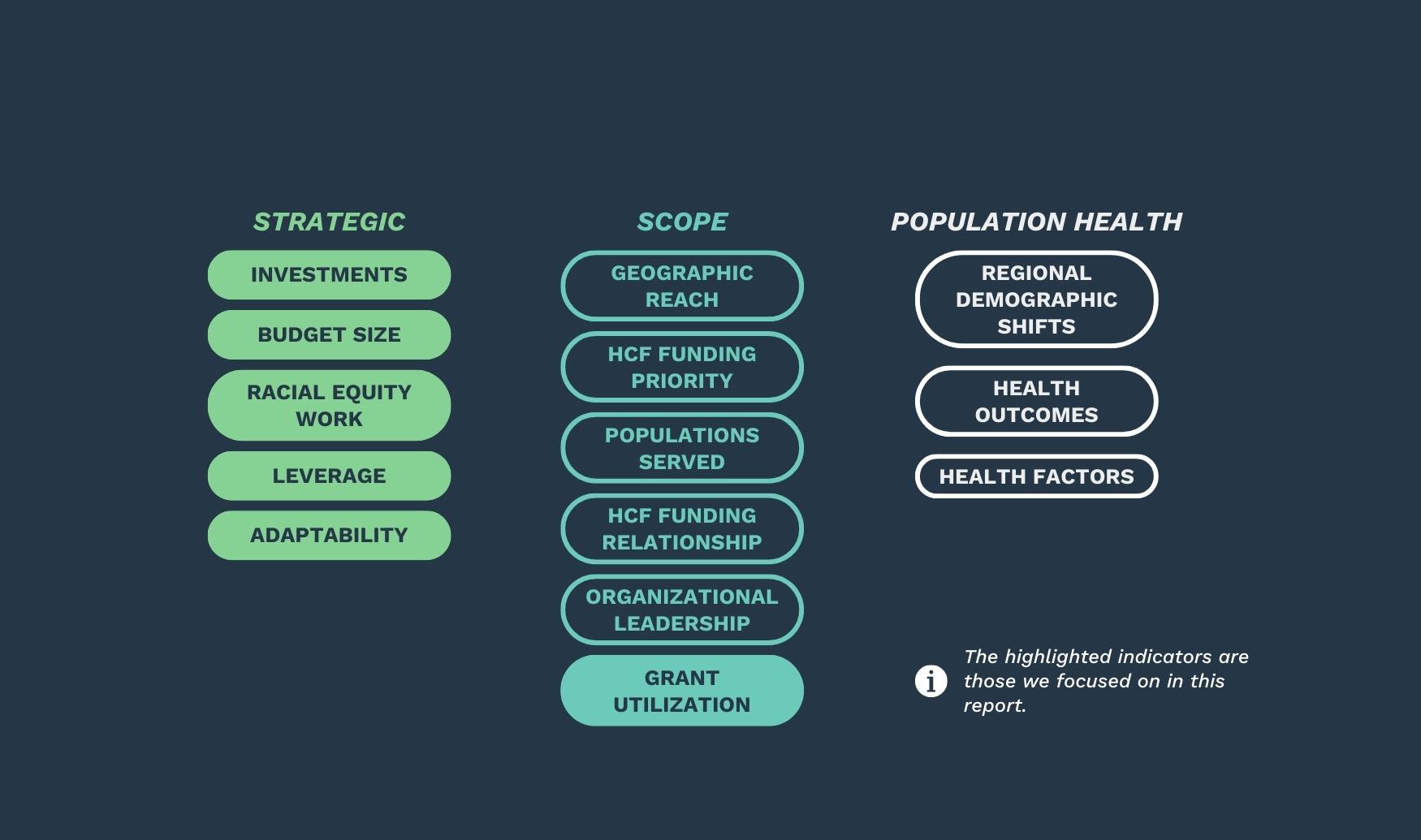
Before we delve into the insights, below shows the data indicators we collected and analyzed in the following three categories:

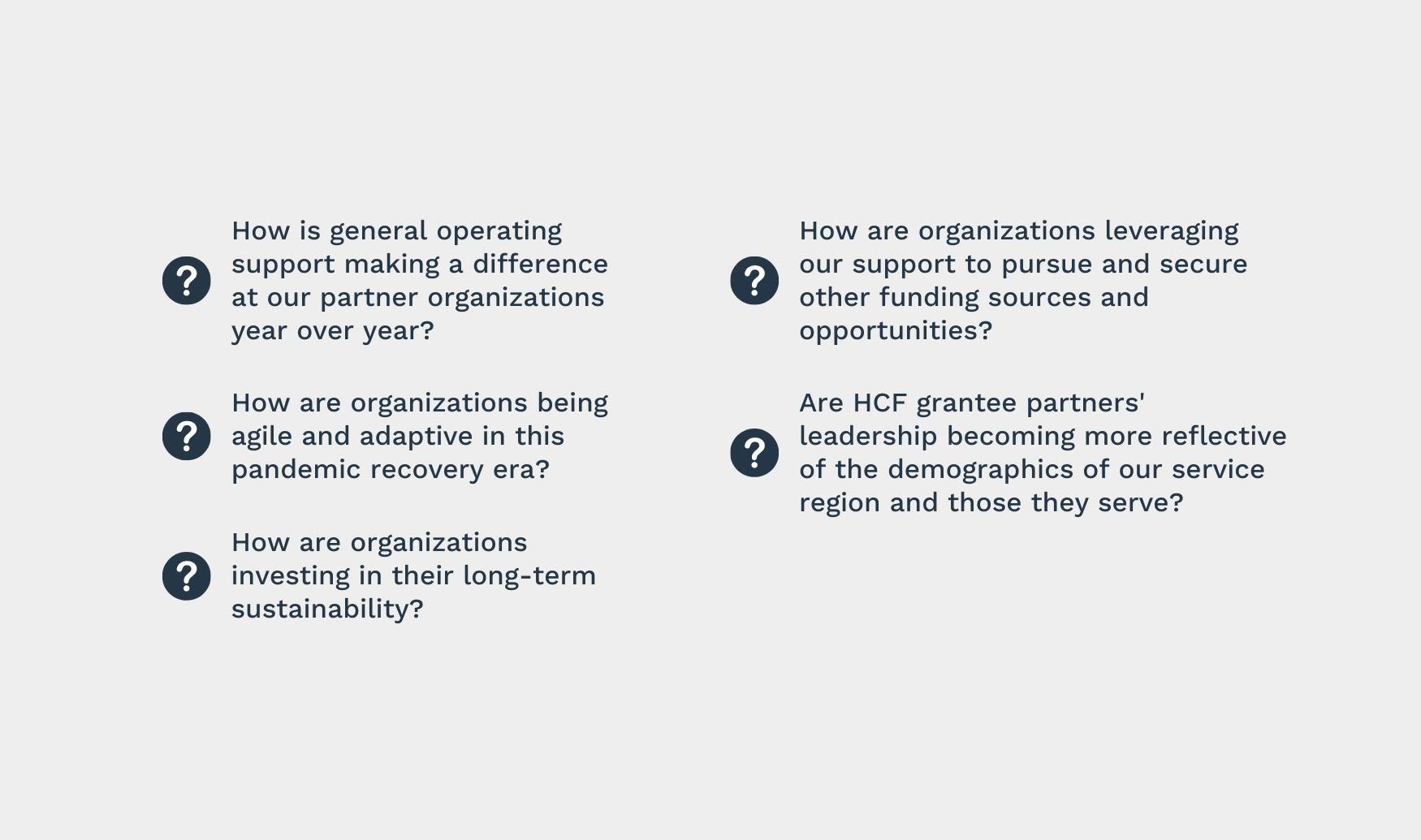
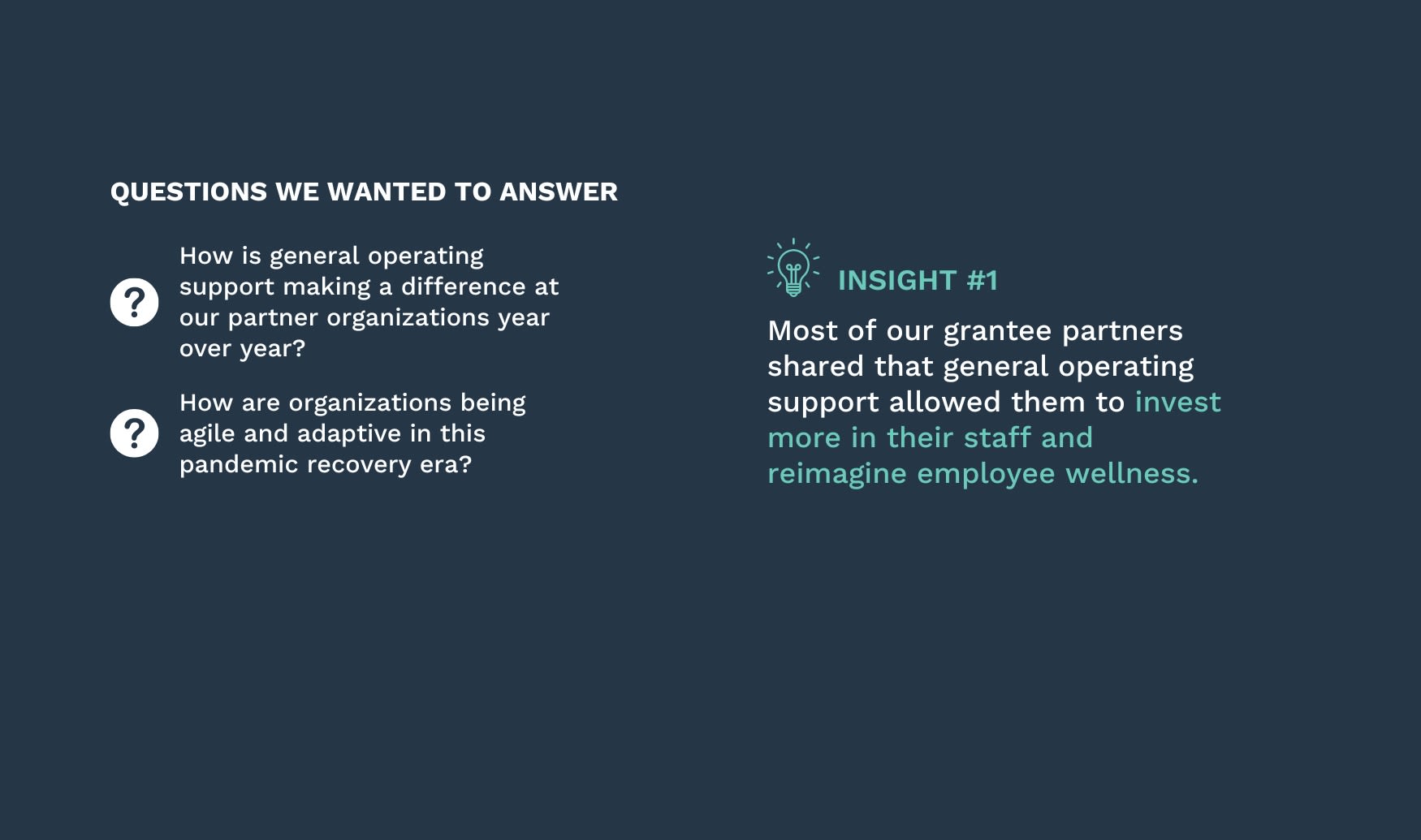
Questions We Wanted to Answer

Here is what we wanted to learn, which guided the “why” behind the types of questions we asked and the data we gathered from our partners:
Insight #1
STAFF INVESTMENT

With our general operating support, partners discussed investing in their workforce as a priority because their staff members are their most valuable resources. i We heard that project-support grants limit organizations because they do not fully fund roles or functions.

We heard about two types of staff investment:
  1. Growing the organization
  2. Investing in current staff

OUR RESPONSE

We trust partners to use general operating support in ways that make the most sense for their organizations. Because of how our partners utilized this funding in 2021-2022, general operating support will remain a cornerstone of our grantmaking.
To take it a step further, we launched the Resilience Grant Initiative for the 2022-2023 grant term to provide opportunities for cohort of smaller BILPOC-led organizations to reimagine a more connected and sustainable way to approach their work during this pandemic recovery phase. These organizations were at the front lines during the pandemic, often with little institutional support. We look forward to sharing more about the Initiative’s first year soon.
For the 2023 grant cycle, we plan to inquire more about pay equity audits and explore resources to initiate this process for grantee partners.

NEW QUESTIONS TO ANSWER

When describing the impact of our general operating support, our multi-year partners used terms such as “able to breathe”, “strategize”, and “take risks”. Our 2021 partners used words such as “respond”, “react”, and “keep the lights on”.
Leaders have to feel that their organization is in a safe place to be able to dream, strategize and take risks.

We want leaders to be able to plan, dream and innovate, not simply survive.

Historically, BILPOC leaders i We used Executive Directors' race and/or ethnicity for evaluation purposes to identify whether a leader was BILPOC. However, we recognize that it is an imperfect measure and are looking for a better definition that is better aligned with our strategic plan. have not had the same access to large, unrestricted multi-year commitments. We believe our role is to resource BILPOC leaders rooted in our region so they can dream about what a healthy community would look like and chart a purposeful path toward that dream.

Insight #2
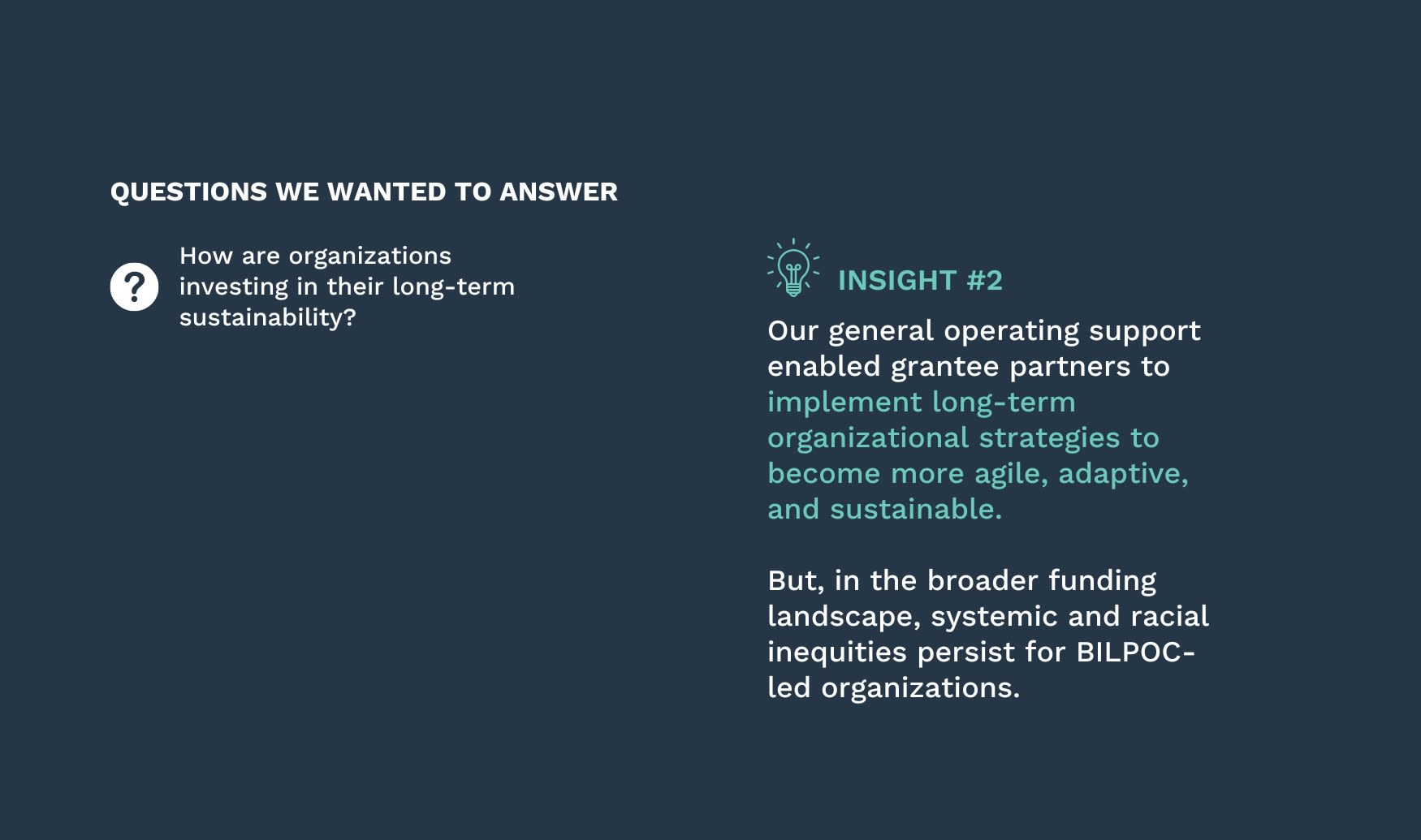
We found that, while organizations saw increases in their budget sizes, it was important to understand the context of where they received funding and how organizations are using these increases to become more agile, adaptive and sustainable.
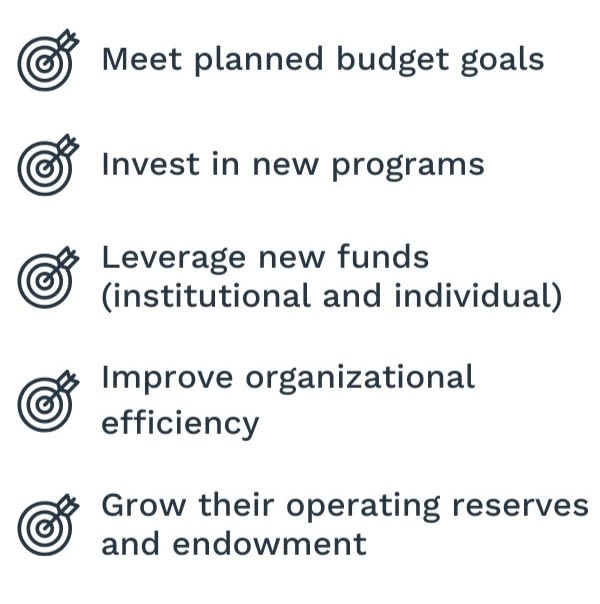
All of our partners shared they were able to implement, at a minimum, two of the following strategies to fortify their organizations for the long term.

OUR RESPONSE

We recognize that not all of our partners have access to the same funding opportunities or can quickly respond to those opportunities.
Given these trends, it is clear to us that a multi-year general operating support strategy for BILPOC-led organizations is beginning to shift their capacity to grow their operations and better meet community needs. We also plan to continue gathering data about the impact of grant sizes on our partners.

NEW QUESTIONS TO ANSWER

Insight #3

OUR RESPONSE

We learned from multi-year partners that multi-year funding commitments enabled them to establish back-office support that could more effectively respond to funding opportunities with tight turnarounds or take on administrative tasks to free up the time and energy of organizational leaders.
Additionally, some funding opportunities required a “match” to be seen as competitive, and our unrestricted dollars would act as that “match” and allow them to access institutional dollars.
Programmatically, since we found that organizations under 5M were not able to leverage funds in the way that larger organizations were, strengthened the work we do supporting AMPT and in our own work with our resilience partners.

NEW QUESTIONS TO ANSWER

We know that funding resources continue to be unevenly distributed to organizations across our service region and these funds often land at larger institutions.


Insight #4
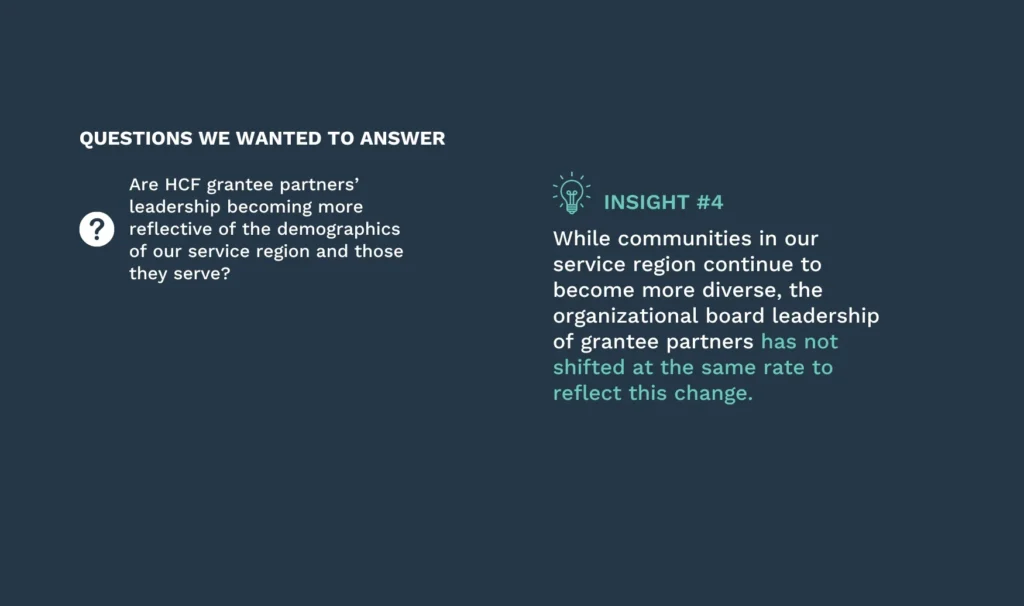
Since 2018, our annual grantmaking strategy has given us strategic insight into how we evolve our grantmaking, particularly where our partners are in their racial equity and health equity journeys and what we could do to support them.
OUR RESPONSE

We have been vocal about how racial equity work is crucial to achieving health equity and how it is an ongoing and unique journey for each organization. Since this work has many entry points and requires long-term commitment, we acknowledge that there is still so much to learn since we are in our very first round of data collection.
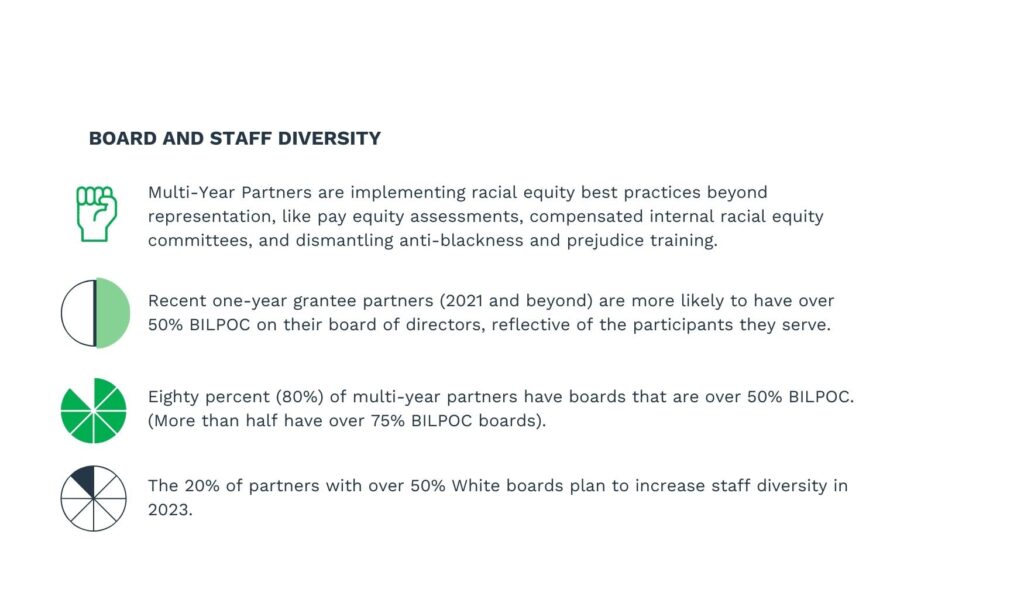
Some partners have progressed in their racial equity journeys through the pandemic and others have slowed, even stalled, their racial equity work. Some partners have made limited progress in diversifying their organizations to better reflect the region’s demographics. As a result, we are looking into an approach that centers direct conversations with our partners about what they want to accomplish in their health and racial equity journeys and the resources they need to get there.
This process requires time, relationship-building, and trust. As we have learned from engaging with multi-year partners, these three things are needed to continue refining our grantmaking priorities and explore how our funding can support racial equity work.

NEW QUESTIONS TO ANSWER

We acknowledge that each partner sees their work in a unique context. Therefore, we want to understand:
Philanthropy also has a role in staying committed to advancing racial equity. When that begins to waver, which we have already seen happening, we see how organizations are losing urgency to continue this work. We are asking ourselves how WE can hold ourselves accountable for our racial equity journey as an organization. We want to ensure we do not replicate or perpetuate the very frameworks we are working to dismantle.
We ask our peers:
What could accountability on racial equity for philanthropy look like?
This is just the beginning of our deep learning process in collaboration with our partners. We continue to be committed to being in right relationship with our partners and peers vs. “being right” and hope to continue working at the speed of our relationships.
We are also determined to be transparent about what we learn from our grantee partners via reports like this. Please reach out to us if you are interested in hearing what has worked and what has been challenging about our data collection and evaluation work.
Read about our recent appearance at the Grantmakers for Effective Organizations 2023 Conference where our Learning and Evaluation Program Manager Gillian Knight presented about our recent changes to our grant report process that centers choice for grantee partners.
Read the 2018-2021 Insights report, the first report we launched since implementing our Learning and Evaluation framework, which outlines how our grantmaking shifted since our reconstitution in 2018 and how it informs the way we want to show up as a foundation today.
Learn more about our Learning and Evaluation framework, where we talk about how we assess how our “talk” aligns with our “walk”. You can also review our Theory of Change for general operating support here and read about the outcomes we seek with our funding, particularly for our grantee partners.