From Practice to Movement: Deepening our Trust-Based Approach
By Nora Garcia, Former Director of Programs
When the Healthy Communities Foundation began implementing a trust-based approach in 2018, we started with the clarity that our actions and decisions needed to go beyond funding and center the values inherent within the four dimensions of trust-based philanthropy: culture, practices, structures, and leadership.
As a reconstituted foundation, we were well-positioned to lean into not only the practices of trust-based grantmaking but also a justice-oriented approach that required deep internal and external examination, reflection, and course correction. We hear the recent sentiment of those fatigued by the shifting landscape of philanthropy, one that popularizes terms like “trust-based philanthropy” but fails to adopt it and, more importantly, adapt to it.
For us, moving to transformational partnerships with and for the communities of our service region, accelerated due to the deep impact of the global pandemic, has required us to work at the intersection of many tensions: data and lived experience, crisis and systems change, collaboration and individual strategy, power and objectivity.
Existing within these tensions has not been easy. While our core values, including our focus on health and racial equity and valuing experiential and evidence-based data, have remained the same, our commitment has been tested. We have had to make decisions that highlight intersecting tensions and interrogate not just what we do but HOW we do it and in partnership with whom.
For us, moving to transformational partnerships with and for the communities of our service region, accelerated due to the deep impact of the global pandemic, has required us to work at the intersection of many tensions: data and lived experience, crisis and systems change, collaboration and individual strategy, power and objectivity.
This perspective pushes us to evolve our strategies and continuously assess how we deepen our trust-based approach through the lens of culture, practice, structures, and leadership.
While philanthropy is generally known to be unaccountable, our inaugural strategic plan articulated accountability to our service region in grantmaking dollars and how the Foundation could leverage non-financial assets, such as convening space, relationships, and external funding opportunities to strengthen the local health equity ecosystem.
During the height of the pandemic and movements for racial justice, our partners made clear that verbal commitments to equity and justice, without the action of moving resources, were not enough. Our Board’s commitment to strategic responsiveness led to the approval of a Bold COVID response policy in 2021 that created the mechanism to move resources quickly in moments of crisis and opportunity. Since then, we have granted $5.5M in direct funding but, more importantly, have facilitated an additional $19.5M in external funding directly to our partners and our service region. We are now institutionalizing this policy and approach beyond a crisis response to continue to move nimbly when needed.
Our partners have shared that while receiving general operating support symbolizes trust between funders and organizations, it is still far too rare.
As we deepen our approach, we recognize that practices are ultimately what we do, best practices are what we should do, and next practices are what we need to do to create the future we seek. For us, that means transforming how we fund.
Since 2018, our ratio of general operating support across all our grantmaking has increased to 80%. Nearly half of this amount consists of three-year funding commitments to a core partner cohort, while the remainder is currently granted through an open annual cycle—an open door that allows us to continue learning about emerging health issues, needs, and organizations working in our service region.
Our pairing of data and learning to inform strategy has shown us that while a best practice is general operating support, our next practice is resourcing organizations for adaptation and resilience so that they can focus on the long game of systems change.
Next year, we will deepen our trust-based grantmaking approach by expanding the number of partners we fund on a multi-year basis and extending the length of that commitment beyond three years.
In Upstream, author Dan Health writes, “Good intentions can’t overcome bad systems.” This statement perfectly illustrates how internal and external structures either support your goals or become barriers to them.
As a reconstituted foundation, we were intentional about implementing processes that supported bidirectional input and feedback from community at the strategy development phase rather than just implementation. These structures included focus groups, surveys, and debrief sessions that have served as emergent learning tools and have supported our trust-based approach and ability to become a community-informed foundation.
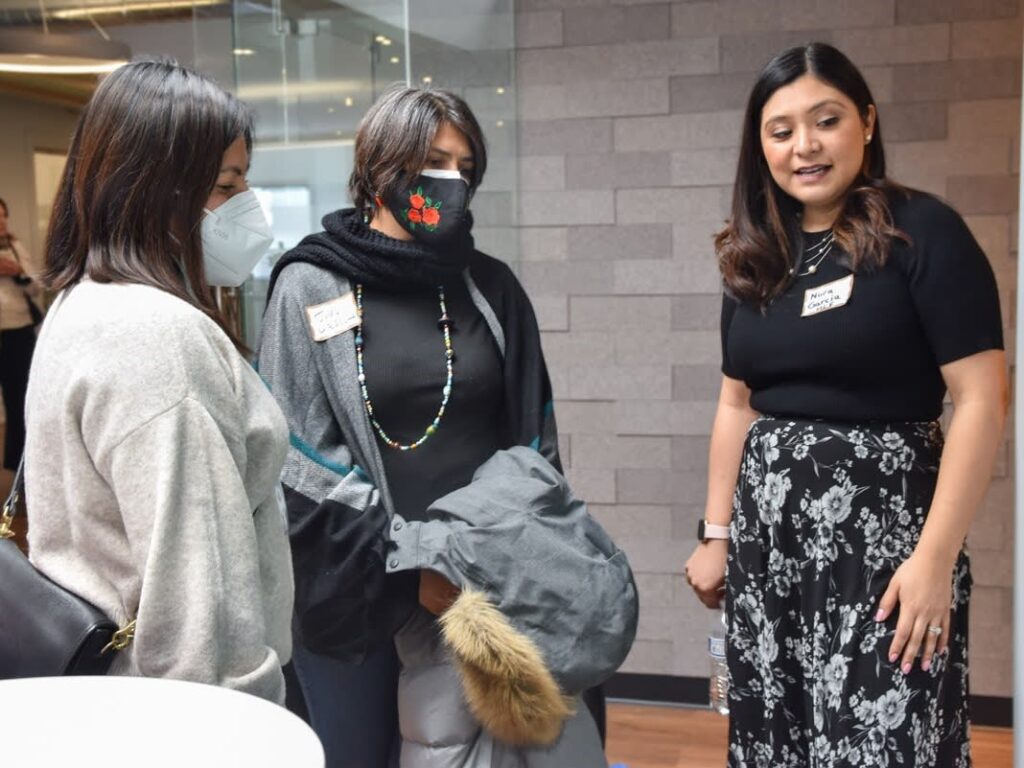
An example of this was the creation of our learning and evaluation framework. Rather than seeking feedback after completing the framework, we began by soliciting and compensating our partners for their input on defining impact. During this process, our partners pushed back on preconceived notions we had about measuring an organization’s success (Spoiler Alert – it’s not all about staff and budgets).
With this feedback, we created a shared definition of impact amongst our staff, board, and grantee partners that now anchors our framework on our role in strengthening the local health equity ecosystem. We have continued this practice when developing strategies for policy advocacy and organizational capacity support.
An important part of our trust-based approach has been understanding the complex collaborations and partnerships required for systems change. We’ve learned that while activism is free for those who can engage civically and politically, the building of movements and systemic work led by and accountable to communities is not.
This work requires sustained and parallel investments in people, places and priorities identified by those most impacted. We view general operating grants as the ground and infrastructure support necessary for organizations to strengthen movements for health equity and invest in their staff’s well-being and leadership.
Last year, we launched Resilience funding for a cohort of organizations to focus dedicated dollars on their people and structures in self-determined ways. Their feedback has informed creating and supporting spaces for them to come together and engage in organizational healing and strategic work, even if that means we are not invited to those spaces.
Examples of this include attending national conferences, staff training, strategic planning, conducting racial and pay equity analyses, and hiring communications and development staff. We recognize that local and connected leaders are one of our service region’s most valuable assets. So, we have taken a dynamic approach to infrastructure support to ensure that leaders and organizations are supported for the long-term work of regenerating institutions.
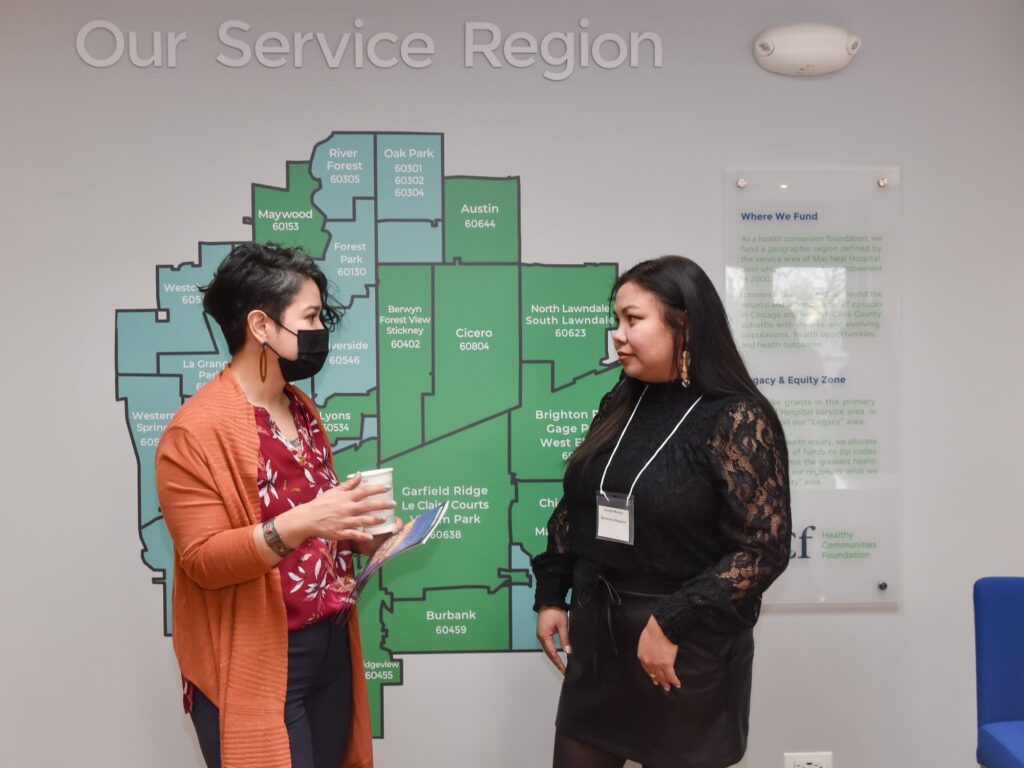
As the philanthropic sector faces a chilling effect from recent SCOTUS decisions and reverting to practices of compliance and risk aversion, we remain committed to trust-based philanthropy as a justice-oriented approach. By acknowledging the harm of philanthropy on BILPOC communities through efforts defunded, social justice movements limited, and leaders left unsupported, we hope our actions and evolution of our trust-based approach will be part of a greater movement that shifts the sector toward centering the communities we serve.
We invite peer funders to embrace the tensions and contend with the complexity and responsibility of our roles within the larger social justice ecosystem.
In this moment of negotiation between ingrained practices and new possibilities, I hold the words of the queer Chicana writer and activist Cherrie Moraga, who said,
“Sometimes a breakdown can be the beginning of breakthrough, a way of living in advance through a trauma that prepares you for a future of radical transformation”.
Let us continue to build the future we dream of by breaking down the philanthropic practices that create barriers and creating momentum for the next practices that will support transformation toward a healthier and more equitable future.